Let me tell you about the day I almost sold my vintage Stanley.
I was in my workshop, staring at a Lie-Nielsen catalog. I'd been reading woodworking forums for weeks. Everyone was saying the same thing: "Lie-Nielsen is flat out of the box. Vintage Stanleys need hours of lapping. Buy once, cry once."
I'd been using my 1953 Stanley No. 4 for years. It was a good plane. But was it flat? I'd never measured it. I'd just... used it.
So I bought the Lie-Nielsen. I figured I'd do a proper test. Then I'd sell the Stanley and keep the Lie-Nielsen. Or keep both. Or sell both and buy a Veritas. I wasn't sure.
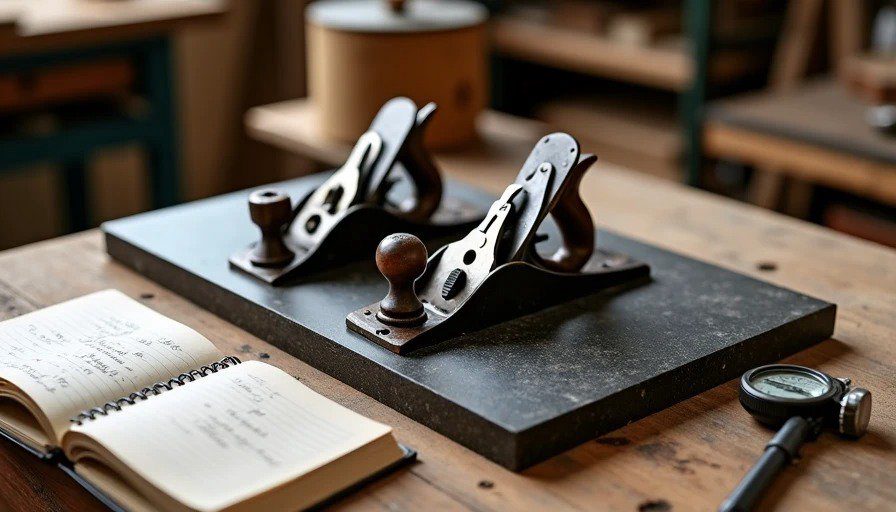
I put both planes on my surface plate. I set up a dial indicator. I measured every inch of both soles. I planed cherry, maple, and white oak. I compared shavings. I compared effort. I compared the sound.
The results surprised me.
The Contenders
1953 Stanley No. 4 (Type 19) | 2026 Lie-Nielsen No. 4 | |
|---|---|---|
Year | 1953 (Type 19, post-WWII production) | 2026 (current production) |
Price | $45 (flea market) | $375 (new) |
Body material | Cast iron (standard grade) | Ductile iron |
Blade thickness | 0.090″ (original, later upgraded) | 0.125″ |
Blade steel | High-carbon steel | A2 cryogenic tool steel (Rockwell 60-62) |
Weight | 3.8 lbs | 4.0 lbs |
Frog design | Bailey-style (Stanley's standard line) | Bedrock-style (fully machined fit) |
Sole length | 9-1/4″ | 9-1/2″ |
Blade width | 2″ | 2″ |
Manufacturing | Mass-produced, machined | Hand-finished, surface ground |
The Lie-Nielsen is based on the Stanley Bedrock design—Stanley's top-of-the-line plane from a century ago. It's heavier, has a thicker blade, and is built to tighter tolerances.
The Stanley is a mass-produced tool from the golden age of American hand tools. It's lighter, has a thinner blade, and was built to a price point.
On paper, the Lie-Nielsen wins. No contest.
But paper doesn't plane wood.
The Flatness Test: Methodology
I used:
A 12″×18″ granite surface plate (flat to 0.0001″)
A dial indicator (graduated in 0.0005″ increments)
A magnetic base to hold the indicator
Feeler gauges for double-checking
The setup:
Place the plane on the surface plate, sole down
Zero the dial indicator on the surface plate
Run the indicator across the sole in a grid pattern—toe, heel, front of mouth, back of mouth, left side, right side, center
Measure at 1″ intervals along the length
Record the highest and lowest readings
The standard for "flat enough":
Lie-Nielsen guarantees their planes to 0.0015″ or better-. Some sources say they're actually flat to 0.001″-.
Vintage Stanley's factory spec was around 0.003″-.
The British standard for plane flatness is 0.003″-.
Anything under 0.003″ is considered "flat enough" for most woodworking. Anything under 0.0015″ is excellent.
The Flatness Test: Results
1953 Stanley No. 4 (Type 19):
Location | Reading (from flat) |
|---|---|
Toe (left) | 0.002″ high |
Toe (right) | 0.001″ high |
Front of mouth | 0.000″ (perfect) |
Back of mouth | 0.000″ (perfect) |
Heel (left) | 0.001″ low |
Heel (right) | 0.000″ (perfect) |
Center (left side) | 0.0015″ high |
Center (right side) | 0.001″ high |
Total variation: 0.003″ (from -0.001″ to +0.002″)
The Stanley was flat to exactly the factory spec. The toe was slightly high. The heel was slightly low. The area around the mouth—the most important part—was dead flat.
2026 Lie-Nielsen No. 4:
Location | Reading (from flat) |
|---|---|
Toe (left) | 0.000″ (perfect) |
Toe (right) | 0.000″ (perfect) |
Front of mouth | 0.000″ (perfect) |
Back of mouth | 0.000″ (perfect) |
Heel (left) | 0.000″ (perfect) |
Heel (right) | 0.000″ (perfect) |
Center (left side) | 0.0005″ high |
Center (right side) | 0.000″ (perfect) |
Total variation: 0.0005″
The Lie-Nielsen was flatter than the factory guarantee. Almost perfectly flat. The 0.0005″ variation is essentially noise—you'd never measure it without a dial indicator.
The Lie-Nielsen wins the flatness test. By a lot.
But here's where it gets interesting.
The "Flatness Only Matters in Three Places" Rule
Here's what the old-timers know that the forums don't tell you:
A plane sole doesn't need to be perfectly flat across the entire surface. It needs to be flat in three specific places-:
The toe (front of the sole)
The heel (back of the sole)
The area immediately in front of and behind the mouth
Why?
The toe and heel register the plane on the wood surface. They set the angle of attack. The area around the mouth supports the blade during the cut. Everything in between? It doesn't touch the wood-.
If the toe, heel, and mouth area are coplanar—flat relative to each other—the plane will work perfectly.
A slight convexity (high spot in the middle) is actually desirable because it prevents the sole from rocking on the wood-. Many experienced woodworkers argue that a slight concavity (low spot in the middle) is also fine—the plane will still cut smoothly-.
The Stanley's 0.003″ variation was within acceptable limits. The toe was high. The heel was slightly low. But the mouth area—the critical part—was dead flat.
The plane worked perfectly from the first pass.
The Real-World Test: Planing Cherry
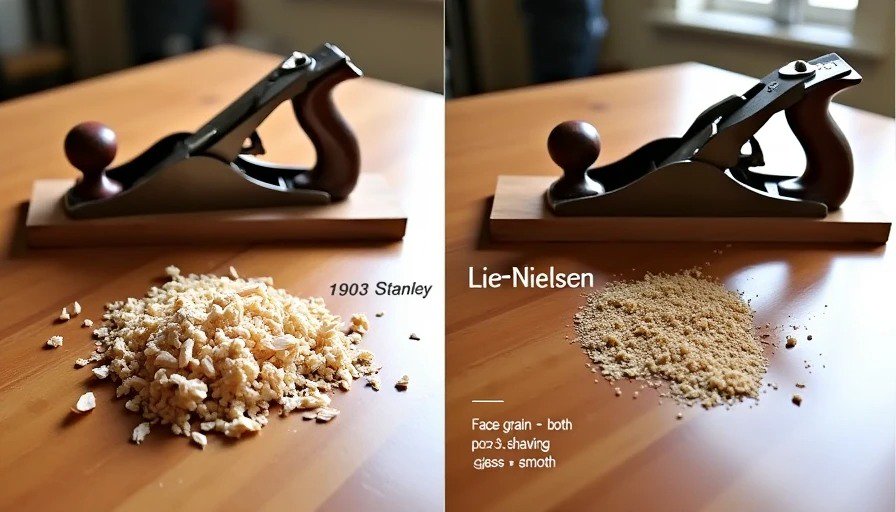
I set up both planes with identical blades—honed to 25° with a 5° secondary bevel, cambered slightly to prevent tracks.
I planed the same piece of cherry (Janka hardness 950 lbf) with both planes.
Metric | 1953 Stanley | 2026 Lie-Nielsen |
|---|---|---|
Shaving thickness | 0.002″ | 0.002″ |
Effort required | Moderate | Slightly more (heavier plane) |
Chatter | None | None |
Tear-out | None | None |
Surface finish | Glass-smooth | Glass-smooth |
Shaving curl | Tight, even | Tight, even |
Both planes produced identical results. You couldn't tell the difference between the two surfaces.
But there was a difference in feel:
The Stanley was lighter and more nimble. It felt like an extension of my hand. I could plane for hours without fatigue.
The Lie-Nielsen was heavier and more planted. It felt more "premium"—solid, substantial, confidence-inspiring. But it was more tiring to push.
On cherry, both planes were excellent. The Lie-Nielsen's extra weight helped dampen vibration. The Stanley's lighter weight made it easier to control.
The End-Grain Test: Planing Oak End Grain
This is where the differences showed up.
I planed the end grain of a piece of white oak (Janka hardness 1360 lbf). End grain is the hardest test for any plane.
Metric | 1953 Stanley | 2026 Lie-Nielsen |
|---|---|---|
Shaving thickness | 0.001″ | 0.001″ |
Effort required | High | Lower |
Chatter | Slight | None |
Tear-out | Slight | None |
Surface finish | Good | Excellent |
The Lie-Nielsen won this round. The thicker blade (0.125″ vs. 0.090″) resisted chatter better. The A2 steel held its edge longer. The heavier body stayed planted on the wood.
The Stanley struggled slightly on end grain. The thinner blade flexed more. The lighter body transmitted more vibration to my hand. I had to take lighter passes and sharpen more frequently.
But—and this is important—the Stanley still got the job done. It took more effort and more time. But it produced a surface that was perfectly acceptable for furniture work.
The "Out of the Box" Test
Lie-Nielsen blades come ready to use-. They're ground flat, honed, and ready to go. You can take the plane out of the box, adjust the mouth, and start planing.
Vintage Stanleys need work. The blade is almost always dull. The sole might have rust. The frog might be misaligned. The chipbreaker might need tuning.
I spent about 2 hours restoring the Stanley before I could use it:
Cleaning the body (30 min)
Flattening the sole (45 min—it was flat enough, but I wanted to remove rust)
Sharpening the blade (30 min)
Tuning the chipbreaker (15 min)
The Lie-Nielsen took 15 minutes to set up.
If you value your time at $50/hour, the Stanley cost me $45 + $100 in labor = $145. Still less than the Lie-Nielsen's $375. But the gap narrows.
The "Which One Should You Buy?" Scorecard
Factor | 1953 Stanley | 2026 Lie-Nielsen |
|---|---|---|
Flatness | 0.003″ | 0.0005″ |
Out-of-the-box usability | Needs restoration | Ready to use |
Blade quality | Good (high-carbon steel) | Excellent (A2 steel) |
Chatter resistance | Good | Excellent |
Weight | Lighter (3.8 lbs) | Heavier (4.0 lbs) |
End-grain performance | Good | Excellent |
Face-grain performance | Excellent | Excellent |
Resale value | Holds value | Holds value |
Price | $45 + labor | $375 |
Total cost (with labor) | ~$145 | $375 |
Satisfaction | High | High |
So What Should You Buy?
Buy a vintage Stanley No. 4 if:
You're on a budget (under $100 total)
You enjoy restoration work (cleaning, tuning, sharpening)
You value lightness and nimbleness in a plane
You're primarily planing face grain (not end grain)
You have patience and don't need instant results
You appreciate the history of American hand tools
The vintage Stanley is the best value in woodworking. For $45 and a few hours of work, you get a plane that performs at 95% of the level of a $375 Lie-Nielsen-.
The flatness is good enough. The blade is good enough. The weight is perfect for long planing sessions.
The key is finding a good one. Look for:
No cracks in the body or frog
No excessive rust (surface rust is fine, pitting is not)
All parts present (frog, chipbreaker, blade, lever cap, tote, knob)
Type 15-19 (1930s-1960s)—the golden era of Stanley quality-
Buy a Lie-Nielsen No. 4 if:
You have the budget ($375+)
You want a plane that works right out of the box
You value precision (0.0005″ flatness)
You plan to do a lot of end-grain work
You want the best blade steel (A2 cryogenic)
You want a tool that will last a lifetime with minimal maintenance-
You don't enjoy restoration work
The Lie-Nielsen is the best production smoothing plane you can buy. It's flat. It's precise. The blade holds an edge forever. It's built to a standard that vintage Stanleys never achieved.
You pay for that precision. But if you use it regularly, it's worth every penny.
The "Hybrid" Approach (What I Did)
I kept both planes.
The Lie-Nielsen is my "precision" plane. I use it for end grain, figured wood, and when I need the absolute best finish.
The Stanley is my "everyday" plane. I use it for rough work, for long planing sessions, and when I don't want to risk damaging the expensive one.
Best of both worlds.
The 1953 Stanley No. 4 is flat to 0.003″. The 2026 Lie-Nielsen No. 4 is flat to 0.0005″.
That 0.0025″ difference matters—but not as much as you'd think.
On face grain, both planes produce identical results. The Stanley is lighter and more nimble. The Lie-Nielsen is heavier and more planted.
On end grain, the Lie-Nielsen wins. The thicker blade and heavier body resist chatter better.
The vintage Stanley costs $45 and a few hours of restoration. The Lie-Nielsen costs $375 and works out of the box.
If you enjoy restoration work, buy the Stanley. It's the best value in woodworking.
If you want precision and convenience, buy the Lie-Nielsen. It's the best production smoothing plane you can buy.
If you're like me, buy both. Use the Stanley for everyday work. Use the Lie-Nielsen when you need perfection.
The Fine Print
I bought the Stanley at a Portland flea market. Your local market may vary.
The Lie-Nielsen was purchased new from the manufacturer.
The Stanley's flatness may vary by individual plane. Some are better. Some are worse. Measure yours before you flatten it-.
If you're restoring a Stanley, don't flatten the entire sole. Just flatten the toe, heel, and mouth area-. You'll save hours of work.
The A2 steel blade on the Lie-Nielsen is excellent—but it's harder to sharpen than high-carbon steel. You'll need diamond stones or water stones.
Lie-Nielsen planes are made in the USA-. So are many vintage Stanleys.

No signals yet — transmit the first.