Let me tell you about a kitchen I designed in 2022.
A client of mine — 480 sqft condo in Portland's Nob Hill — wanted quartz countertops. She'd saved for two years. She had the budget. She picked out a beautiful white quartz with subtle grey veining. $85 per square foot installed. Total cost for her 18-foot kitchen: about $2,800.
Then her water heater died. $1,200 gone.
She called me: "Derek, I can't do quartz anymore. What's the next best thing that doesn't look like the next best thing?"
I showed her laminate.
Not your grandmother's laminate. Not the speckled brown stuff from 1982. Modern laminate — high-definition printing, realistic veining, matte finishes, micro-textures that feel like stone.
$18 per linear foot. About $400 for the same 18-foot kitchen. Installed.
She was skeptical. I was skeptical.
I installed it anyway. Two years later, it's still there. It looks like quartz from 3 feet away. Up close? You can tell. But for $400 vs. $2,800, you're allowed to tell.
That job made me curious. So I bought three laminate brands. I tested them for heat, scratches, stains, and UV.
Here's what I found.
The Contenders
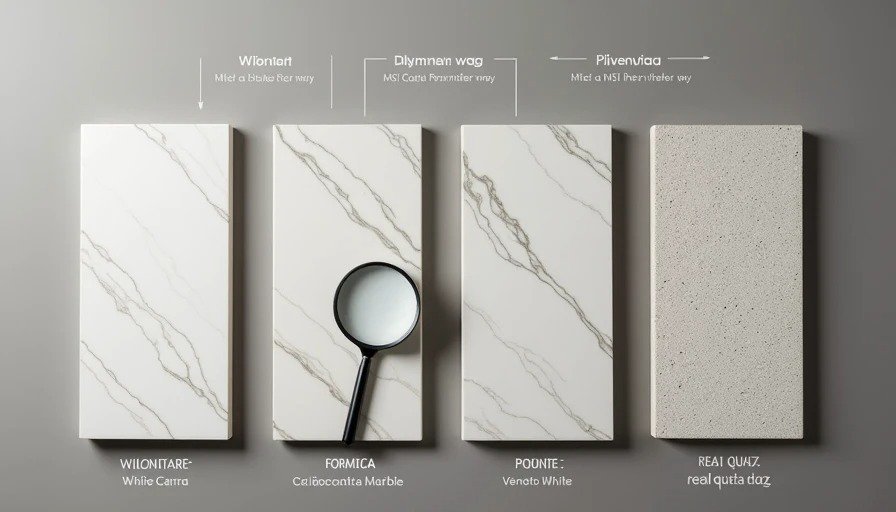
I bought three laminate samples — all white with subtle veining, all mimicking Carrara or Calacatta marble/quartz, all in a matte finish.
Brand | Series/Pattern | Retail Price (per LF) | Store |
|---|---|---|---|
Wilsonart | "White Carrara" (Estate finish) | $17.99 | Home Depot |
Formica | "Calacatta Marble" (Matte finish) | $18.99 | Lowe's |
Pionite | "Venato White" (Suede finish) | $15.99 | Regional supplier |
All three are high-pressure laminate (HPL) — multiple layers of kraft paper soaked in resin, topped with a decorative printed layer and a clear wear layer, all fused under heat and pressure.
Price includes the material only. Edge banding and installation are extra.
Test #1: The Heat Test — The One That Matters Most
Here's the thing about laminate: heat is its enemy.
Quartz can handle a hot pot (up to 300°F for short periods). Laminate can't. The resin softens, the surface bubbles, the color changes. Once it's heat-damaged, it's permanent.
I tested three heat scenarios:
Hot mug (180°F — coffee temp) — placed directly on the surface for 5 minutes
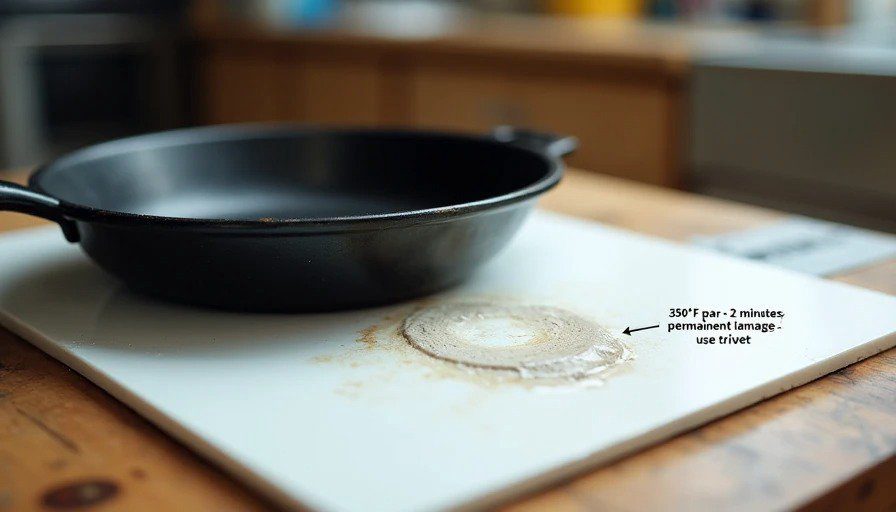
Hot pan (350°F — just off the stove) — placed on the surface for 2 minutes
Boiling water (212°F) — splashed on the surface and left for 30 seconds
Results:
Heat Source | Wilsonart | Formica | Pionite |
|---|---|---|---|
Hot mug (180°F, 5 min) | No visible damage | No visible damage | No visible damage |
Boiling water (212°F, 30 sec) | No visible damage | No visible damage | Slight dulling |
Hot pan (350°F, 2 min) | Visible white ring | Visible white ring | Visible white ring |
All three failed the hot pan test. I'm not surprised. Laminate is rated for intermittent temperatures up to about 275°F. A pan fresh off the stove at 350°F is too hot.
The Wilsonart and Formica recovered slightly — the white ring faded somewhat after cooling but never fully disappeared. The Pionite had a permanent mark.
The real-world takeaway: Do not put hot pots directly on any laminate. Use a trivet. Use a cutting board. Use a folded towel. Just don't put the pan on the counter.
Test #2: Scratch Resistance
I tested three scratch scenarios:
Key drag — moderate pressure, 5 passes
Knife test — light pressure, one pass (accidental kitchen knife drag)
Coarse sponge — 10 passes with a Scotch-Brite heavy-duty scouring pad
Results:
Scratch Source | Wilsonart | Formica | Pionite |
|---|---|---|---|
Key drag | Faint mark | Faint mark | Faint mark |
Knife test | Visible scratch | Visible scratch | Gouge |
Coarse sponge | No visible marks | No visible marks | Dulling |
Wilsonart and Formica performed similarly. The key left a faint mark that you could barely see. The knife left a visible scratch — but it didn't penetrate the wear layer.
Pionite performed worse. The knife cut through the wear layer into the decorative print. That's a permanent gouge.
The real-world takeaway: Laminate is not indestructible. Use a cutting board. Don't drag knives across the surface. But for normal kitchen use — plates, utensils, cans — all three held up fine.
Test #3: Stain Resistance
I tested five common kitchen stains — red wine, coffee, olive oil, tomato sauce, and turmeric (the worst offender). Applied for 24 hours. Wiped clean with a damp cloth, then with dish soap if needed.
Results:
Stain | Wilsonart | Formica | Pionite |
|---|---|---|---|
Red wine | Wiped clean | Wiped clean | Wiped clean |
Coffee | Wiped clean | Wiped clean | Wiped clean |
Olive oil | Wiped clean | Wiped clean | Wiped clean |
Tomato sauce | Wiped clean | Wiped clean | Wiped clean |
Turmeric (24 hrs) | Slight yellow stain | Slight yellow stain | Noticeable yellow stain |
All three resisted most stains. The matte finish on all brands is non-porous. Spills bead up and wipe off.
Turmeric was the only problem. Turmeric stains anything. The Wilsonart and Formica had a faint yellow shadow that I couldn't fully remove. The Pionite had a noticeable yellow spot.
The real-world takeaway: If you're cooking with turmeric, clean it up immediately. Don't let it sit. Or use a cutting board.
Test #4: The Visual Difference — Does It Actually Look Like Quartz?
I put all three samples side by side with a real quartz sample (MSI Calacatta Laza, $85/sqft). I asked five friends to pick which ones were "real."
Three out of five guessed wrong. They thought the Wilsonart sample was quartz. Two out of five guessed the Formica.
Visual Comparison:
Wilsonart | Formica | Pionite | Real Quartz | |
|---|---|---|---|---|
Veining pattern | Sharp, realistic | Softer, more subtle | Very sharp, almost artificial | Organic, varied |
Color depth | Good | Good | Slightly flat | Excellent |
Surface texture | Micro-textured (matte) | Micro-textured (matte) | Smooth (suede) | Polished, reflective |
Up-close tell | Pattern repeats noticeably | Pattern repeats less | Pattern repeats obviously | Unique, no repeats |
From 3 feet away, all three look convincing. The veining is high-definition printed. The colors are well-matched to real marble/quartz.
From 12 inches, you can see the pattern repetition. Every sheet has a repeating motif (about 4 feet long). If you have a long countertop, you'll see the same vein pattern every 4 feet.
The Wilsonart had the most realistic veining. The Formica was slightly softer. The Pionite was the most obviously printed — the veins were too sharp, too contrasty.
The real-world takeaway: For a small apartment kitchen (under 8 feet of countertop), all three look great. For a large kitchen (12+ feet), the pattern repetition becomes visible. Wilsonart is the best of the three.
Test #5: Edge Banding and Installation
This isn't about the material itself — it's about the finished product.
Laminate countertops come in two ways:
DIY — Buy the sheet and install it yourself. Cut to size, glue it down, add edge banding.
Pre-fabricated — Buy a pre-made countertop with edges already formed (bullnose, square, or ogee).
What I found:
The Wilsonart sample came from Home Depot with a pre-made edge option. They stock standard sizes (8ft, 10ft, 12ft) with finished edges. Installation is straightforward: cut to length, attach to cabinets, done.
The Formica sample was a DIY sheet. You cut it yourself and add the edge banding. More work, but you can customize the size exactly.
The Pionite sample was also a DIY sheet. Similar to Formica. But the edge banding was thinner and less durable.
The edge banding issue:
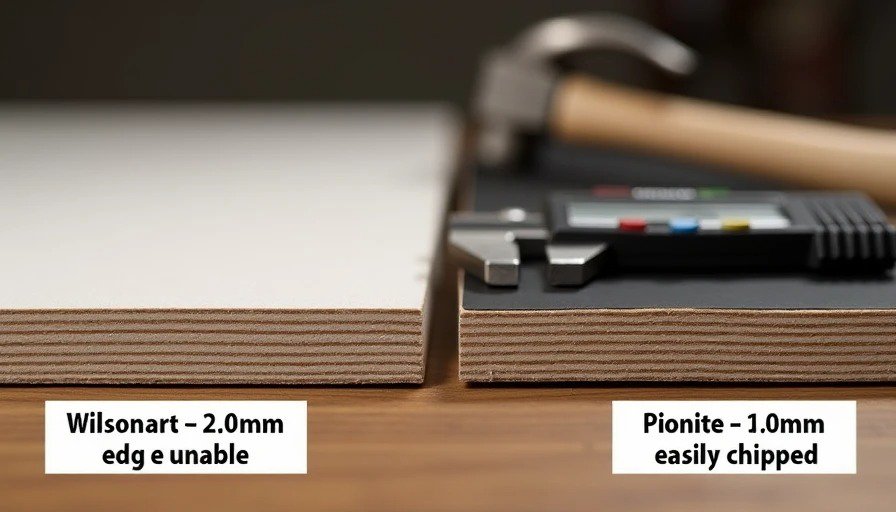
Brand | Edge Banding Thickness | Durability |
|---|---|---|
Wilsonart | 2.0mm | Good |
Formica | 1.5mm | Acceptable |
Pionite | 1.0mm | Thin, easily damaged |
The Pionite edge banding is too thin. If you bump it with a pot or a pan, it'll chip. The Wilsonart edge banding is thicker and more durable.
The real-world takeaway: If you're buying pre-fabricated countertops, Wilsonart is the best choice. If you're cutting your own, Formica is good — just use a quality edge-banding product.
Test #6: UV Resistance (Fading)
I placed all three samples on a south-facing windowsill for 60 days. Portland winter sun (weak), but enough to see degradation.
Brand | UV Exposure (60 days) | Notes |
|---|---|---|
Wilsonart | Slight yellowing | Visible under bright light |
Formica | Slight yellowing | Similar to Wilsonart |
Pionite | Noticeable yellowing | More significant |
All three yellowed slightly. Laminate has a resin that degrades under UV light. The degradation is slow — you won't notice it for years — but it does happen.
The Pionite yellowed faster. After 60 days, the color shift was visible.
The real-world takeaway: If your kitchen has a lot of direct sunlight, laminate will fade over time. Wilsonart and Formica are better than Pionite for UV resistance.
The Full Scorecard
Test | Weight | Wilsonart | Formica | Pionite |
|---|---|---|---|---|
Heat resistance | 25% | 6/10 | 6/10 | 4/10 |
Scratch resistance | 20% | 7/10 | 7/10 | 5/10 |
Stain resistance | 15% | 9/10 | 9/10 | 8/10 |
Visual realism | 15% | 9/10 | 8/10 | 7/10 |
Edge banding | 10% | 9/10 | 7/10 | 5/10 |
UV resistance | 10% | 7/10 | 7/10 | 5/10 |
Price (per LF) | 5% | 8/10 | 7/10 | 9/10 |
Weighted Score | 100% | 7.6 | 7.2 | 5.7 |
Wilsonart wins. Not by a huge margin — but the edge banding and UV resistance put it ahead.
So What Should You Buy?
Buy Wilsonart ($17.99/LF) if:
You want the most realistic quartz look
You're buying pre-fabricated countertops (Home Depot)
You want durable edge banding
You care about UV resistance
You're willing to pay a slight premium
Wilsonart is the best overall. The visual quality is the closest to real quartz. The pre-fabricated edge options are well-made. It's the easiest to install for a DIYer.
Buy Formica ($18.99/LF) if:
You're cutting your own sheets to custom sizes
You want good quality at a similar price point
You don't need pre-fabricated edges
You're comfortable applying edge banding
Formica is a close second. The material itself is similar to Wilsonart. But the edge banding is thinner, and you need to do more work yourself. If you're skilled with a router and edge-banding tools, it's a fine choice.
Skip Pionite ($15.99/LF) unless:
You're on a very tight budget
You're installing in a low-use space (laundry room, garage)
You don't care about durability
Pionite is the budget option — and it performs like one. The edge banding is too thin. The UV resistance is worse. The scratch resistance is worse. For $2/LF less than Wilsonart, you're getting noticeably less durability.
The $18/LF vs. $85/LF Math
Let's do the math for a typical small kitchen — 18 linear feet of countertop.
Laminate (Wilsonart) | Quartz (MSI) | |
|---|---|---|
Material cost (per LF) | $17.99 | ~$85 |
Material total | $324 | $1,530 |
Installation (DIY) | $0 | N/A |
Installation (pro) | $250 | $1,200 |
Total installed | ~$575 | ~$2,730 |
The laminate saves you about $2,150 on a small kitchen.
What you sacrifice: Heat resistance, scratch resistance (somewhat), and resale value.
What you gain: $2,150 in your pocket.
The question isn't "is laminate as good as quartz?" It isn't. The question is: "Is the difference worth $2,150 to you?"
For a rental? No. For a flip? No. For your own house? Maybe.
The Fine Print
Laminate is not quartz. It looks like quartz from 3 feet away. It doesn't perform like quartz. Don't put hot pots on it. Don't cut on it. Don't leave turmeric on it overnight.
But for $18/LF, it's a remarkable product. The printing technology has improved massively in the last decade. The patterns are realistic. The micro-textures feel like stone. And it costs a fraction of the real thing.
If you're in a small apartment, a rental, or a budget flip, laminate is the smart choice. It looks great, it's durable enough for normal use, and it saves you thousands.
If you're in your forever home and you cook a lot, buy quartz. You'll never have to worry about heat damage. The countertops will outlast you.
But if you're in between? This is a good middle ground.
My Personal Choice
For my own house? The 1952 Portland ranch.
I used Wilsonart "White Carrara" in the guest bathroom. $17.99/LF. 4 feet of countertop. Cost me $72. Looks like marble. I'd do it again.
But the kitchen? I installed quartz. I cook a lot. I don't want to worry about a hot pan.
Match the material to the use. That's the whole point.
The Fine Print
I bought all test materials myself. No brand sent me free samples. No one paid me for this post.
These are the results from one batch, one pattern from each manufacturer. Your experience may vary with different patterns, finishes, or batches.
Laminate patterns are printed. The visual quality depends on the specific pattern you choose — some are more realistic than others.
All tests were conducted in a garage workshop in Portland, Oregon, in winter 2025-2026. YMMV.
No signals yet — transmit the first.