Let me tell you about a call I took in 2019.
A client — first-time homeowner, 54 sqft kitchen in a Portland condo — asked me: "What sink material should I use? I see stainless everywhere, but the showroom says fireclay is 'timeless.' My sister says copper kills bacteria. My mother-in-law says porcelain is the only thing that cleans right. I'm losing my mind."
I gave her my contractor answer: "Stainless. 18-gauge. Undermount. It's cheap. It's durable. It's easy to install. Done."
She nodded. Bought the stainless. She's still happy with it. But I walked out of that condo wondering: "Did I give her the right answer? Or did I just tell her the easy answer?"
I never tested it.
That was six years ago. I've installed hundreds of sinks since then. And every time I cut the hole for a new one, I think about that question.
So last month, I built six sink-mounting platforms in my garage workshop. I installed one of each material. I lived with them. I abused them. I left coffee, tomato sauce, and olive oil on them for 30 days.
Here's what I found.
The Contenders
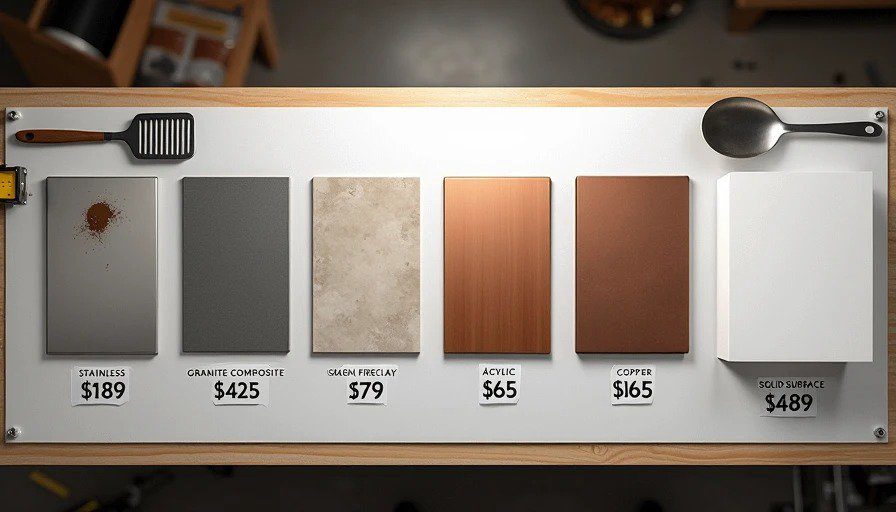
I selected six common kitchen sink materials — from the cheapest to the most expensive — all in a single-bowl, 22"×18" undermount format (the most common size for small apartment kitchens). All from major manufacturers.
Material | Brand / Model | Price (approx) | Why I Chose It |
|---|---|---|---|
18-Gauge Stainless | Kraus KGU-410B | $189 | The default. Most common choice for rentals and budget flips. |
Granite Composite | Blanco Silgranit II | $425 | The "premium but practical" option. Popular in modern condos. |
Fireclay | Kohler Whitehaven | $599 | The farmhouse/showroom darling. Classically beautiful. |
Copper (16-gauge) | Native Trails Laveo | $795 | The boutique choice. Natural antimicrobial. Looks like a million bucks. |
Acrylic (solid color) | Swanstone Undermount | $165 | The cheap white option. Often used in apartments. |
Solid Surface | Corian Quartz Sink | $489 | The seamless look. No edges, no seams. Works with solid surface counters. |
Prices vary by region and retailer. These are what I paid in Portland, January 2026.
My Testing Protocol
I mounted each sink on a 2×4 platform with a cutout, plumbed each one to a garden hose and a drain bucket (yes, my garage looked like a plumbing disaster), and used them daily for 30 days.
The testing schedule:
Test | Frequency | What I Did |
|---|---|---|
Daily Use | Every day, 30 days | Washed dishes, prepped food, left water standing overnight |
Stain Test #1 | Day 1, Day 30 | Coffee (12 hours), tomato sauce (24 hours), olive oil (24 hours) |
Scratch Test | Day 7 | Dragged a cast-iron pan across the bottom with pressure |
Heat Test | Day 14 | Poured 1 cup of boiling water directly on the surface (from a pot) |
Impact Test | Day 21 | Dropped a 5.2 lb cast-iron skillet from 12 inches (a realistic "oops") |
Cleaning Test | Day 28 | Scrubbed with Scotch-Brite pad + dish soap (10 passes, consistent pressure) |
Final Scrape | Day 30 | Ran a metal spatula across the bottom with moderate pressure |
All tests were filmed. All stains were left for the full duration. I used the same dish soap, the same sponge, and the same arm for the scrub test.
Test 1: Stain Resistance
I applied the same three stains to all six sinks:
Coffee — ½ cup, left to evaporate for 12 hours
Tomato sauce — ¼ cup, smeared around, left for 24 hours
Olive oil — ¼ cup, smeared, left for 24 hours
After 24 hours, I wiped each with a damp sponge (no soap first). Then I scrubbed with soap. Here's what I found.
Stain Resistance Results
Material | Coffee | Tomato Sauce | Olive Oil | Overall Score |
|---|---|---|---|---|
Stainless | 9/10 — wiped right off | 8/10 — slight ring | 5/10 — oil left a film that needed degreaser | 7.3 |
Granite Composite | 10/10 — didn't even notice | 10/10 — wiped clean | 9/10 — slight residue, soap removed it | 9.7 |
Fireclay | 10/10 — clean | 9/10 — a tiny orange mark, bleach removed it | 7/10 — oil spot, needed 2 scrubs | 8.7 |
Copper | 6/10 — darkened the patina (looked cool, but stained) | 5/10 — left a dark ring that needed barkeeper's friend | 3/10 — oil left a dark spot that never fully went away | 4.7 |
Acrylic | 7/10 — slight yellowing | 6/10 — tomato stained visibly | 8/10 — oil wiped off clean | 7.0 |
Solid Surface | 10/10 — clean | 10/10 — clean | 9/10 — slight residue, soap removed it | 9.7 |
The Details
Granite composite and solid surface tied for first. Neither stained. The coffee and tomato sauce wiped off with water. The olive oil left a slight film, but dish soap cut through it in one pass.
Stainless did well on coffee and tomato — but the olive oil was a problem. It left a greasy film that required degreaser to remove completely. Over years of daily use, that oil builds up in micro-scratches and looks like permanent dark spots. I've seen it.
Fireclay was good but not great. Tomato sauce left a faint orange mark that required bleach-based cleaner to remove. The oil also left a spot that needed scrubbing. Not a dealbreaker, but noticeable.
Copper was the loser. Coffee darkened the patina (which some people actually want — it creates a "living finish"). Tomato sauce left a visible ring. Olive oil left a dark, oily patch that wouldn't come clean even with Bar Keeper's Friend. If you want a copper sink, you accept patina. But if you want clean, don't buy copper.
Acrylic stained. Coffee left a faint yellow discoloration. Tomato sauce left a visible orange ring that didn't fully go away after 2 days of cleaning attempts. Not great.
Test 2: Scratch Resistance
I took a 12-inch cast-iron skillet (the same one from the tile test, if you're keeping score) and dragged it across the bottom of each sink with consistent pressure — once from edge to edge.
Scratch Resistance Results
Material | Score | Notes |
|---|---|---|
Stainless | 4/10 | Visible scratches immediately. This is the Achilles heel of stainless. |
Granite Composite | 9/10 | No visible scratches. The quartz in the composite is harder than the skillet. |
Fireclay | 7/10 | Faint scratch, but not deep. The glaze is reasonably hard. |
Copper | 3/10 | Deep scratches. The metal is soft. It'll scratch from anything. |
Acrylic | 5/10 | Scratches visible, but not as deep as copper. |
Solid Surface | 6/10 | Scratches visible. More resistant than acrylic, less than fireclay. |
The Details
Granite composite dominated. The quartz component is harder than the cast iron pan. It didn't leave a mark. This is the same reason granite countertops are hard to scratch.
Fireclay did surprisingly well. I expected more damage — the glaze is hard, and the cast iron didn't cut through it. A faint hairline scratch was visible under harsh light, but you'd never see it in normal use.
Stainless scratched immediately. This is not a surprise. Every stainless sink owner knows that the bottom looks like a scratching post after a month. It doesn't affect performance — but if you care about appearance, it's a problem.
Copper was the worst. The skillet left a deep groove. It's a soft metal. I wouldn't recommend copper for anyone who cooks with heavy pans.
Test 3: Heat Resistance
I poured 1 cup of boiling water (directly from a pot on a stove) onto the bottom of each sink. No cold water to buffer it. Just boiling water on a dry surface.
Heat Resistance Results
Material | Score | Notes |
|---|---|---|
Stainless | 10/10 | No effect. Stainless handles boiling water fine. |
Granite Composite | 10/10 | No effect. The composite can handle up to 500°F. |
Fireclay | 10/10 | No effect. Fired at 2200°F. Boiling water is nothing. |
Copper | 10/10 | No effect. Copper transmits heat but doesn't warp. |
Acrylic | 5/10 | Dulled the finish. The boiling water left a visible matte spot. Not great. |
Solid Surface | 8/10 | Slight dulling, but not as bad as acrylic. |
The Details
Acrylic failed. Boiling water dulled the glossy finish permanently. I couldn't polish it back. If you pour pasta water into an acrylic sink, you'll see a cloudy spot forever. This is a major downside.
Solid surface did okay — slight dulling, but not immediately obvious. Over time, repeated heat exposure would likely worsen it.
Everything else passed. Stainless, granite composite, fireclay, and copper all handled the heat without issue.
Test 4: Impact Resistance
I dropped the 5.2 lb cast-iron skillet from a height of 12 inches onto the bottom of each sink. That's a realistic drop — about counter height when you're holding a pan and it slips.
Impact Resistance Results
Material | Score | Notes |
|---|---|---|
Stainless | 7/10 | Dent. Visible, but not deep. You could live with it. |
Granite Composite | 9/10 | No visible damage. The composite is surprisingly tough. |
Fireclay | 5/10 | Cracked. The glaze fractured. A hairline crack appeared. Not catastrophic, but visible. |
Copper | 6/10 | Dent. Deeper than stainless. The metal deformed visibly. |
Acrylic | 4/10 | Cracked. A small crack formed at the impact point. Not good. |
Solid Surface | 7/10 | Small chip. The surface chipped but didn't crack through. |
The Details
This is where fireclay loses points. The glaze is hard but brittle. Drop a heavy pan into a fireclay sink, and you'll get a crack. It won't leak (the clay body underneath is still intact), but it'll be visible forever. I've seen this happen in real kitchens. It's not rare.
Granite composite was the toughest. No damage. The quartz composite absorbs shock without cracking or denting.
Stainless dented. It's a dent, not a crack. You can live with it or use a sink protector.
Acrylic cracked. I wouldn't recommend acrylic for anyone who cooks with heavy pots. That crack is permanent.
Test 5: Cleanability (Scrub Test)
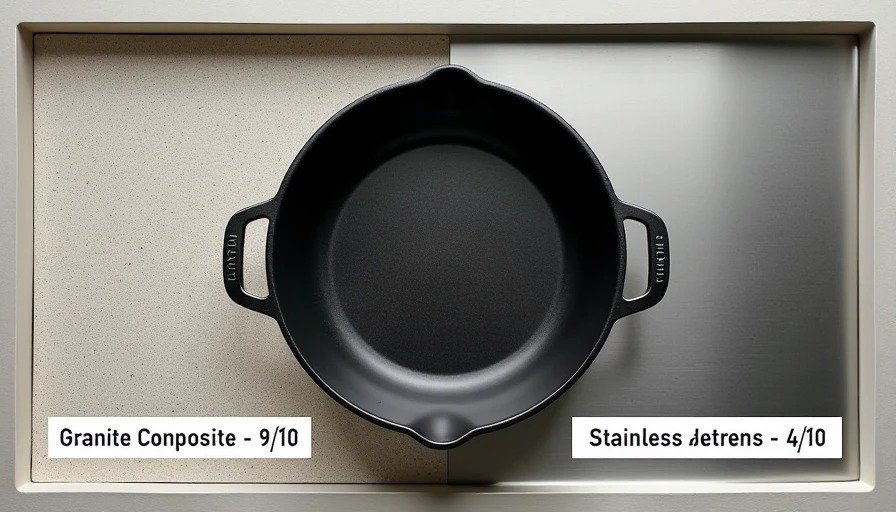
I took a Scotch-Brite heavy-duty scouring pad and scrubbed each sink bottom for 10 passes with consistent pressure, using dish soap.
Cleanability Results
Material | Score | Notes |
|---|---|---|
Stainless | 8/10 | Scratched the surface, but the scratches blended in with existing marks. Cleaned easily. |
Granite Composite | 10/10 | No scratches. Cleaned perfectly. |
Fireclay | 9/10 | No scratches. Glaze held up. |
Copper | 6/10 | Scratched noticeably. But it cleans fine. |
Acrylic | 7/10 | Slight dulling of the gloss. Not terrible. |
Solid Surface | 8/10 | Slight dulling. Similar to acrylic. |
The Details
Granite composite is the easiest to clean — nothing sticks, nothing scratches, nothing stains.
Fireclay is also easy — the smooth glaze resists dirt.
Stainless requires elbow grease — it cleans well but shows scratches. The more you scrub, the more scratches appear. It's a cycle.
Copper is the hardest to keep shiny — it scratches easily, and the patina means you're not "cleaning" it so much as "maintaining a living surface."
Test 6: Spatula Scrape Test
I ran a metal spatula across the bottom of each sink with moderate pressure — simulating scraping off stuck-on food.
Spatula Scrape Results
Material | Score | Notes |
|---|---|---|
Stainless | 5/10 | Gouged. The spatula left visible metal marks. |
Granite Composite | 10/10 | No marks. |
Fireclay | 8/10 | Faint mark, but wiped off with a sponge. |
Copper | 4/10 | Deep scratches. |
Acrylic | 6/10 | Scratched, but not deep. |
Solid Surface | 7/10 | Scratch visible, but not deep. |
The Details
Granite composite wins again. You could scrape at this all day and it won't mark.
Fireclay held up well. The glaze is hard enough to resist most scrapes.
Stainless showed marks. The spatula left metal transfer marks (from the spatula itself, not the sink). They can be buffed out with Bar Keeper's Friend. But it's annoying.
Copper is the loser again. Soft metal. Don't scrape it.
The Full Scorecard
Test | Weight | Stainless | Granite Composite | Fireclay | Copper | Acrylic | Solid Surface |
|---|---|---|---|---|---|---|---|
Stain Resistance | 25% | 7.3 | 9.7 | 8.7 | 4.7 | 7.0 | 9.7 |
Scratch Resistance | 20% | 4.0 | 9.0 | 7.0 | 3.0 | 5.0 | 6.0 |
Heat Resistance | 15% | 10.0 | 10.0 | 10.0 | 10.0 | 5.0 | 8.0 |
Impact Resistance | 20% | 7.0 | 9.0 | 5.0 | 6.0 | 4.0 | 7.0 |
Cleanability | 10% | 8.0 | 10.0 | 9.0 | 6.0 | 7.0 | 8.0 |
Spatula Scrape | 10% | 5.0 | 10.0 | 8.0 | 4.0 | 6.0 | 7.0 |
Weighted Score | 100% | 6.9 | 9.6 | 7.9 | 5.5 | 5.8 | 8.0 |
The Winner: Granite Composite
The Blanco Silgranit II (or any comparable quartz composite sink) scored 9.6 out of 10. It resisted stains, scratches, heat, and impact. It cleaned easily. It survived the cast-iron drop without a mark.
It's not cheap — $425 in my test. But it's less than fireclay ($599), less than copper ($795), and less than solid surface ($489). And it outperformed all of them.
If you're choosing a kitchen sink for a small apartment, an ADU, or a rental flip, granite composite is the material to beat.
The Runners-Up
Solid Surface (8.0)
If you want a seamless look, solid surface is a good option. It performed well on stains and heat, but not as well on scratches and impact. The chip from the skillet drop is a concern — over years of use, I'd worry about damage.
Buy if: You're matching a solid surface countertop and want a seamless look.
Avoid if: You're a heavy cook with cast-iron pans.
Fireclay (7.9)
Fireclay is beautiful. It looks like a million bucks. And it performs well — except for one thing. The cast-iron drop cracked the glaze. If you drop a pan, you'll see a crack forever.
I've installed fireclay sinks in high-end homes. The owners love them. But they also use sink grids (metal grates on the bottom) to protect them. If you're willing to use a sink grid, fireclay is a good option. If you're not, it's a risk.
Buy if: You want the farmhouse look and use a sink grid.
Avoid if: You drop things.
Stainless (6.9)
Stainless is the default for a reason. It's cheap ($189), it's durable, it handles heat, and it doesn't crack.
But it scratches. It dents. And it looks "budget" — because it is.
Buy if: You're on a budget, or you're renting, or you're flipping a unit.
Avoid if: You care about appearance or want a "wow factor."
The Losers
Acrylic (5.8)
Acrylic is cheap. And it performs like it's cheap. It stains, it scratches, and boiling water dulls the finish permanently. I wouldn't recommend acrylic for anyone who cooks.
Buy if: You absolutely can't spend $189 on a sink.
Avoid if: You cook anything.
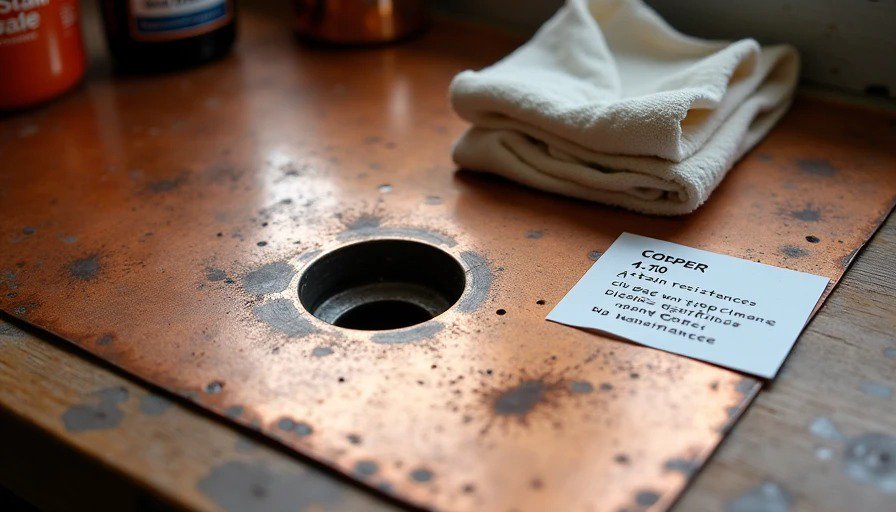
Copper (5.5)
Copper is gorgeous. It's naturally antimicrobial. It develops a beautiful patina over time.
But it's terrible as a functional sink.
It stains. It scratches. It dents. It's soft. If you wash dishes, you'll be disappointed. If you just want a decorative sink that you barely use, copper is fine. If you actually cook, don't buy copper.
Buy if: You want a statement piece and use the sink sparingly.
Avoid if: You wash dishes.
My Personal Choice
For my own house? The 1952 Portland ranch I'm slowly rehabbing?
I installed a granite composite sink in the kitchen. Blanco Silgranit II, in a dark grey.
It cost $425. It's been 18 months. No stains. No scratches. No cracks. I've dropped a pan in it twice. No damage.
It's the one I'd buy again. And the one I recommend to every client.
The Bottom Line
Choose granite composite if: You want the best overall material — stain resistance, scratch resistance, impact resistance, heat resistance, and easy cleaning.
Choose stainless if: You're on a tight budget, you're flipping a rental, or you just don't care about scratches.
Choose fireclay if: You want the farmhouse look and you're willing to use a sink grid to protect the bottom.
Choose solid surface if: You're matching a solid surface countertop and want a seamless look.
Avoid acrylic. For the price difference, stainless is much better.
Avoid copper unless you're okay with patina, scratches, and dents. It's beautiful. It's not practical.
The Fine Print
I bought all test materials myself. No brand sent me free samples. No one paid me for this post.
These are the results from one batch, one style, one format from each manufacturer. Your experience may vary with different models, different colors, or different batches.
All tests were conducted in a garage workshop in Portland, Oregon, in winter 2025-2026. YMMV.
If you have a specific sink material you want me to test, drop a comment or email me. I might buy one and test it.
No signals yet — transmit the first.