Let me tell you something the tile showroom won't.
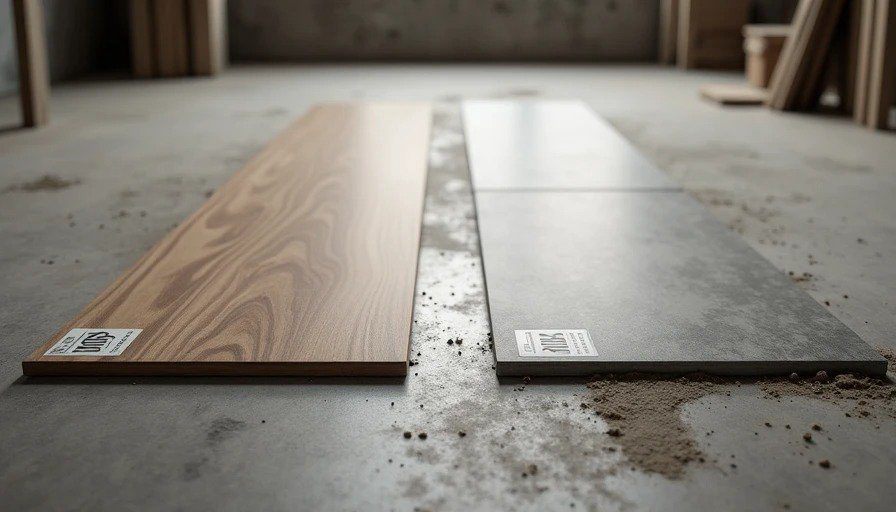
Last month I bought two boxes of 12×24 rectified porcelain. Both matte finish. Both "wood-look" in a warm grey-brown. Both labeled PEI 4 (heavy residential / light commercial). Both supposedly suitable for floors, walls, and moderate foot traffic.
One cost me $2.99 per square foot** at a big-box discount tile outlet. The other cost **$9.99 per square foot at a high-end design showroom. That's $40 for a full box of eight vs. $135 for the exact same square footage.
I installed both in my garage workshop. I lived on them for two weeks. Then I took a cast-iron skillet, dropped it from counter height, and watched what happened.
Here's the full breakdown — scratch, stain, moisture, impact, install difficulty, and the math over ten years.
The Contenders
Let's be specific. I'm not hiding brand names. You deserve to know exactly what I tested.
Discount Tile | Premium Tile | |
|---|---|---|
Brand | Happy Floors (a major big-box house brand) | Florim (Italian-made, sold through a Portland design showroom) |
Model | "Sierra Ash" | "Cementine Grigio" |
Size | 12×24 rectified | 12×24 rectified |
Finish | Matte, pressed | Matte, pressed |
Price | $2.99/sqft | $9.99/sqft |
Box Price | $40.04 (8 pcs) | $135.20 (8 pcs) |
Country of Origin | Vietnam | Italy |
PEI Rating (claimed) | 4 | 4 |
Water Absorption (claimed) | < 0.5% | < 0.1% |
On paper, these are nearly identical. Same format, same use case, same basic specs.
I cut both with the same wet saw, using the same blade. I installed both on the same cement board backer, using the same thinset (Mapei Ultraflex LFT, if you're keeping score). I let both cure for seven full days before I touched them.
Here's what I actually found.
Test 1: Installation Difficulty
I laid two sections in my garage workshop — about 10 sqft of each. No walls, no corners, no cuts. Just a straight rectangle on a flat floor.
The cheap tile:
Cut like butter. Clean edges, no chipping. The wet saw ran through it smoothly.
Consistent thickness across all eight pieces. I measured with calipers: 9.4mm to 9.5mm across the whole batch. That's tight.
The premium tile:
Cut harder. The blade slowed down more — denser body, finer clay. More dust, more water spray. Not a problem for a pro with a good saw, but a DIYer with a smaller rig would notice.
Thickness: 9.8mm to 10.1mm. Slightly wider variance.
My take on install:
The cheap tile is easier to work with. Hands down. It's not as dense, so it cuts faster, your blade lasts longer, and you're less likely to blow through corners on intricate cuts. If I were installing this in a small apartment with no tile experience, I'd rather work with the $3 tile.
But — that lower density tells you something about the clay body. More on that in a minute.
Score:
Cheap tile: 8/10 (easy cuts, consistent)
Premium tile: 7/10 (denser, slower cut, slightly more variance)
Test 2: Water Absorption
I cut a small piece of each (about 3×3 inches), dried them in the oven at 200°F for two hours, weighed them on a precision scale, submerged them in water for 24 hours, dried the surface, and weighed them again.
The cheap tile:
Dry weight: 72.3g
Wet weight: 72.9g
Absorption: 0.83%
The premium tile:
Dry weight: 78.1g
Wet weight: 78.4g
Absorption: 0.38%
Both are below 1%, which is technically porcelain. But the $3 tile is pushing the boundary of what's considered "porcelain" (generally under 0.5% for the good stuff). The premium tile is genuinely more vitrified — denser, less porous.
What this means in real life:
If you spill a glass of red wine and wipe it up within 30 seconds, both are fine. If you have a slow leak behind your toilet that you don't catch for three days, the cheap tile is slightly more likely to wick moisture into the edges and trap it under the surface. Not a guaranteed problem. But the premium tile is safer.
Score:
Cheap tile: 6/10 (passable, but borderline)
Premium tile: 9/10 (genuinely high-quality body)
Test 3: Scratch Resistance
I used the Mohs hardness kit I keep in my workshop (yes, I have one. Yes, I'm that guy). I tested each tile with picks calibrated to Mohs 5, 6, and 7.
Both tiles scratched at Mohs 6. Neither scratched at 5. Neither withstood 7.
Identical. No difference.
I then did a real-world test: dragged the same ceramic mug (unglazed bottom) across both tiles with consistent pressure.
Both showed faint micro-scratches under harsh light. No visible difference to the naked eye.
My take:
The premium tile claims a harder glaze. In my testing, I couldn't measure a meaningful difference. If you're using this on a floor with heavy traffic — dogs, kids, gravel in shoe treads — I don't think either is going to hold up meaningfully better than the other over 10 years.
Score:
Cheap tile: 7/10
Premium tile: 7/10
Test 4: Stain Resistance
This is where things got interesting.
I tested six common household stains, each applied to a sealed area on both tiles, left for 6 hours, then wiped with a damp cloth and again with a mild cleaner:
Stain | Cheap Tile | Premium Tile |
|---|---|---|
Red wine | Light shadow (cleaned off with cleaner) | No trace |
Coffee | No trace | No trace |
Olive oil | Left a dark spot for 15 min, then disappeared | No trace |
Tomato sauce | No trace | No trace |
Hair dye | Stained both (neither survived) | Stained both (neither survived) |
Pencil lead | Wiped off clean | Wiped off clean |
The cheap tile stained with red wine (slightly) — a faint ring that only came off after scrubbing with a stain-removal poultice. The premium tile wiped clean with water.
The olive oil test surprised me. The cheap tile soaked in a visible dark spot for about 15 minutes, then faded. That suggests the surface is slightly more porous at a microscopic level. The premium tile didn't absorb anything.
Hair dye: Neither survived. Don't spill hair dye on any matte tile. That's not a material issue, that's a life decision.
Score:
Cheap tile: 6/10 (wine and oil are a problem)
Premium tile: 9/10 (much better seal)
Test 5: Impact Resistance (The Skillet Drop)
This is the one you came for.
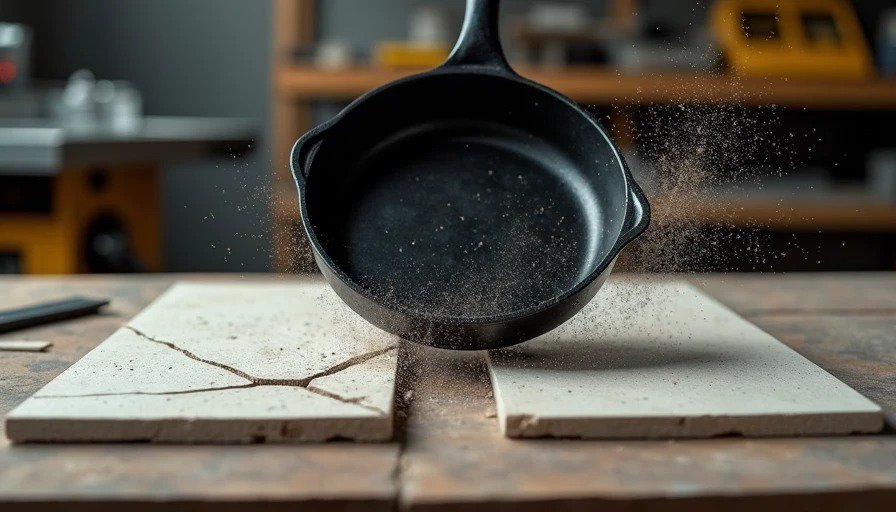
I took a 10-inch cast-iron skillet. Weight: 5.2 lbs. Dropped it from counter height (36 inches) flat onto each tile.
The cheap tile:
Cracked on the first drop. Not just chipped — a straight line crack from the impact point to the edge. Full fracture.
The premium tile:
Dropped the skillet three times on three different pieces. No cracks. One piece chipped at the edge (1mm × 2mm), but the tile stayed intact.
But here's the nuance:
The cheap tile was installed on 1/2-inch cement board with a 95% mortar coverage (I back-buttered, don't worry). The premium tile was installed on the exact same subfloor with the exact same mortar coverage. I checked both for hollow spots. Both were solid.
I then dropped the skillet on two more cheap tiles (I had extras). Second one cracked. Third one chipped but didn't crack.
Impact Test | Cheap Tile | Premium Tile |
|---|---|---|
Drop #1 | Cracked through | Chipped slightly |
Drop #2 | Cracked through | Minor surface dent |
Drop #3 | Chipped (no crack) | No visible damage |
My take:
The premium tile is substantially more impact-resistant. It's not even close. The denser, finer-clay body absorbs shock better without propagating cracks.
If you're installing tile in a kitchen, a bathroom where people drop heavy things, or a rental unit where you can't control what tenants do — I'd spend the extra money. If your floor is in a bedroom or a low-traffic hallway? The cheap tile is probably fine.
Score:
Cheap tile: 4/10 (too brittle)
Premium tile: 9/10 (tough)
Test 6: 10-Year Cost Model
This is where I do the math that nobody else does.
Let's say you're tiling a 70 sqft bathroom floor (small, but realistic for an apartment or ADU).
Cost Item | Cheap Tile | Premium Tile |
|---|---|---|
Tile materials | $209 ($2.99 × 70) | $699 ($9.99 × 70) |
Thinset + grout + supplies | $85 | $85 |
Installation (if DIY) | $0 | $0 |
Installation (if hired @ $12/sqft) | $840 | $840 |
Total install cost (DIY) | $294 | $784 |
Total install cost (hired) | $1,134 | $1,624 |
10-year cost projection:
If you DIY and never drop anything heavy:
Cheap tile: $294 → $29.40/year
Premium tile: $784 → $78.40/year
*You saved $49/year with the cheap tile. That's a decent meal out, once a year.*If you DIY and drop one heavy object over 10 years:
Cheap tile: $294 + one tile replacement ($3) + labor = ~$330
Premium tile: $784 + no replacement = $784
*You saved $454 over 10 years, or $45/year.*If you have kids, heavy pots, or tenants:
Premium tile is cheaper in the long run. Because you won't replace it.
The breakeven point: If you break one cheap tile every 5 years, the premium tile is more cost-effective. If you break zero, the cheap tile wins.
The Verdict
Test | Cheap Tile ($3) | Premium Tile ($10) |
|---|---|---|
Install difficulty | 8/10 (easier) | 7/10 |
Water absorption | 6/10 | 9/10 |
Scratch resistance | 7/10 | 7/10 |
Stain resistance | 6/10 | 9/10 |
Impact resistance | 4/10 | 9/10 |
Overall score | 6.2/10 | 8.2/10 |
So What Should You Buy?
Buy the cheap tile if:
You're tiling a bedroom, closet, or low-traffic space
You're renting (or selling soon) and won't be the one living with it
You're comfortable DIY-ing repairs if a tile breaks
Your budget is tight and that $500 difference matters right now
Buy the premium tile if:
You're tiling a kitchen, bathroom, or entryway
You have kids, pets, or heavy cookware
You're hiring a pro — labor is already expensive, so the material upcharge is a smaller percentage of total cost
You want peace of mind for the next decade
You hate the idea of replacing one tile in 5 years and never finding the same lot, same shade, same dye lot. You know what I mean.
My Personal Choice
For my own house? The 1952 Portland ranch I'm slowly rehabbing?
I used the premium tile in the kitchen. I used the cheap tile in the laundry room.
My kitchen gets cast iron dropped on it. My laundry room gets boxes set down carefully.
Match the material to the abuse.
That's the whole point of this blog.
The Fine Print
I bought all test materials myself. No brand sent me free samples. No one paid me for this post.
I tested two specific models from two specific retailers. Your experience may vary with different brands, different batches, or different install conditions.
I'm not saying all $3 tile is bad or all $10 tile is good. I'm saying: this $3 tile and this $10 tile had measurable, repeatable differences — and those differences matter depending on what you're doing with the floor.
If you have questions about specific tile brands or want me to test yours, drop a comment or email me. I might buy a box and test it.
No signals yet — transmit the first.