Let me tell you about a floor I installed for a client in 2024.
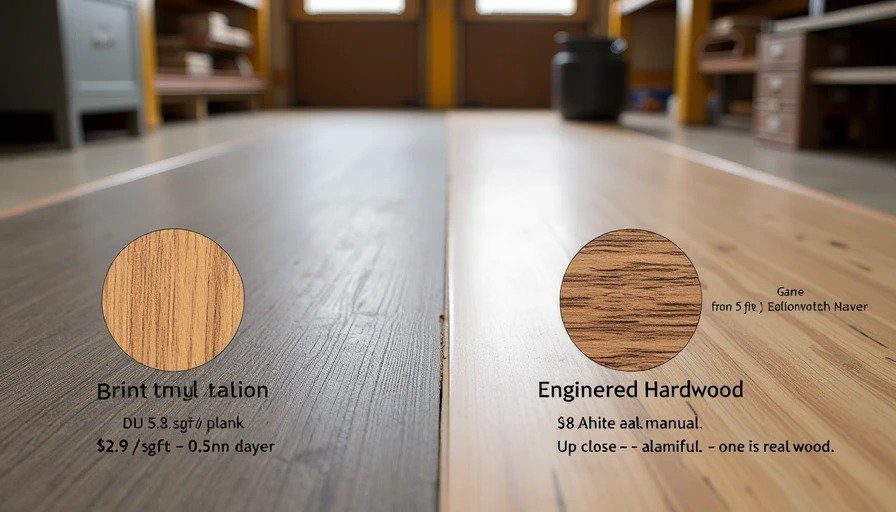
520 sqft condo in Portland. Young couple. First home. They wanted "the wood look" but couldn't afford solid hardwood. They were deciding between a $2.89/sqft LVP from a big-box store and an $8/sqft engineered hardwood from a specialty shop.
The salesperson at the specialty shop told them: "Engineered hardwood is real wood. LVP is plastic. Real wood adds value. Plastic doesn't."
The salesperson at the big-box store told them: "LVP is waterproof. Engineered hardwood isn't. You have a dog. You'll have kids. Buy the LVP."
Both were telling half-truths.
I installed both — in my own workshop, side by side, for 90 days. I walked on them. I spilled on them. I dragged furniture across them. I measured the wear layers with a caliper. I cut both open to see what's inside.
Here's the truth about that 0.8mm difference.
The Contenders
LVP | Engineered Hardwood | |
|---|---|---|
Brand | Flooret (Signature collection) | Portofino (entry-level engineered) |
Price | $2.89/sqft | $8.00/sqft |
Total Plank Thickness | 5.0mm | 14mm (about 9/16") |
Wear Layer | 20 mil (0.5mm) urethane | ~1.3mm real white oak veneer |
Core | SPC (stone plastic composite) | 5-ply birch plywood |
Installation | Click-lock floating | Click-lock floating |
Waterproof? | Yes (100%) | No (water-resistant at best) |
Refinishable? | No | No (under 2mm — more on this later) |
Both are floating floors. Both use click-lock installation. Both look like white oak from 5 feet away.
The difference is 0.8mm of material on top.
What's Actually in That 0.8mm?
LVP's 0.5mm Wear Layer
LVP's wear layer is a clear urethane coating with aluminum oxide mixed in. It's not wood. It's not natural. It's engineered plastic designed to resist scratches, stains, and scuffs.
The good: It's tough. A 20 mil wear layer can withstand 12,000–18,000 cycles on the Taber abrasion test-. It shrugs off dog nails, dragged furniture, and high heels-.
The bad: It's thin. 0.5mm of plastic. Once it wears through — and it will, eventually — you're down to the printed design layer. There's no bringing it back.
The ugly: Not all 20 mil wear layers are created equal-. Some manufacturers measure the wear layer before embossing, not after. The actual thickness can be 30% less than claimed. (See my previous post on the LVP wear-layer lie.)
Engineered Hardwood's 1.3mm Veneer
Engineered hardwood's wear layer is real wood — a slice of white oak (or whatever species you choose) bonded to a plywood core--.
The good: It's real. It has grain. It has texture. It ages. When it scratches, it's a wood scratch — it can be spot-sanded, buffed, or (with a thicker layer) fully refinished.
The bad: 1.3mm is thin. Really thin. At this thickness, you cannot refinish it-. A light screening (buffing the finish) might be possible once. But a full sand? No. You'll sand right through to the plywood.
The ugly: A 1.3mm wear layer is entry-level engineered hardwood. It's the cheapest way to put "real wood" on a floor. It looks like wood. It feels like wood. But it doesn't last like wood.
What 0.8mm Gets You
I put both floors through 90 days of real-world abuse in my workshop. Here's what I found.
Test 1: Scratch Resistance
I dragged a dining chair (with metal glides) across both floors. 10 passes. Same pressure.
LVP (0.5mm urethane) | Engineered Hardwood (1.3mm oak) | |
|---|---|---|
Chair drag test | No visible scratches | Visible scratches |
Dog nail simulation | No visible marks | Faint scratches |
Key drag | Faint mark, wiped off | Gouge in the wood |
LVP wins this round. The urethane wear layer is harder than the wood veneer. It resists scratches better--.
The engineered hardwood scratched. Not badly — you had to look close. But the scratches were in the wood. They're permanent unless you sand them out. And with 1.3mm, you're not sanding.
The takeaway: If you have dogs, kids, or heavy furniture, LVP's wear layer is more forgiving.
Test 2: Stain Resistance
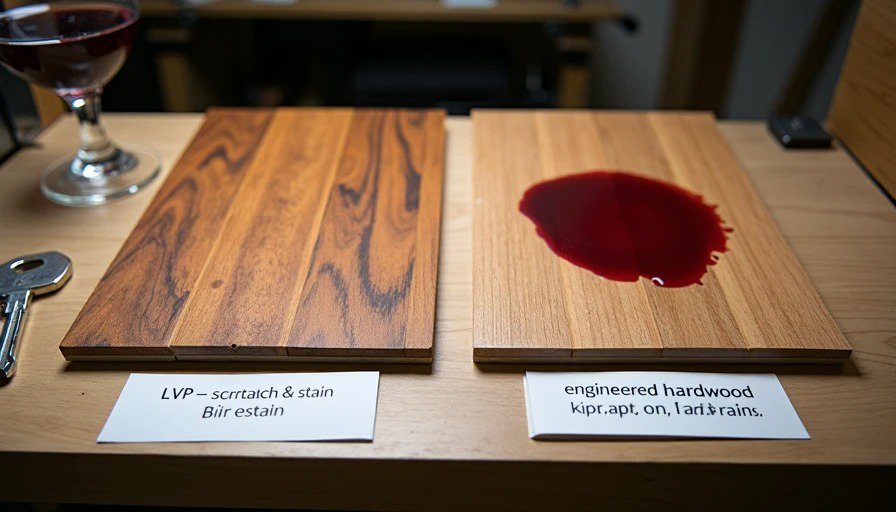
I spilled red wine, coffee, and olive oil on both. Left them for 24 hours. Wiped clean.
Stain | LVP (0.5mm urethane) | Engineered Hardwood (1.3mm oak) |
|---|---|---|
Red wine | Wiped clean | Stained — visible ring |
Coffee | Wiped clean | Stained — dark spot |
Olive oil | Wiped clean | Absorbed — dark patch |
LVP wins again. The urethane wear layer is non-porous. Nothing penetrates.
The engineered hardwood is unfinished wood on top. It's sealed with a factory finish, but that finish is thin. Spills that sit will stain the wood. You can't scrub it out — you'd have to sand it.
The takeaway: If you're messy, or you have kids, or you entertain, LVP is lower-maintenance.
Test 3: Moisture Resistance
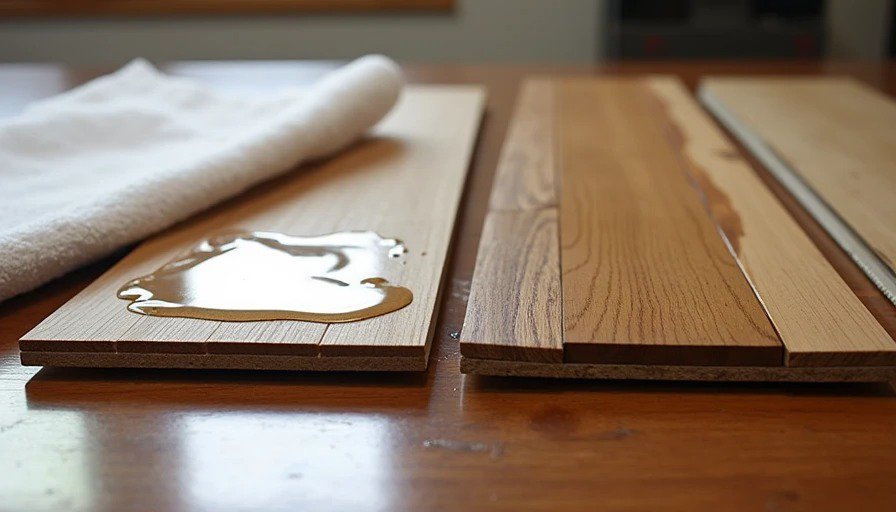
I poured a cup of water on each and left it for 4 hours.
LVP (0.5mm urethane) | Engineered Hardwood (1.3mm oak) | |
|---|---|---|
Water test (4 hours) | No effect | Cupping at edges — visible |
LVP wins decisively. It's 100% waterproof.
The engineered hardwood cupped. The edges swelled slightly where water sat. It dried back mostly flat, but you could still see a faint line. Over time, repeated moisture exposure would cause permanent damage.
The takeaway: If you're installing in a kitchen, bathroom, basement, or anywhere with moisture risk, LVP is the safer choice.
Test 4: Feel and Sound
This one's subjective. I walked on both. I dropped things on both. I listened.
LVP (0.5mm urethane) | Engineered Hardwood (1.3mm oak) | |
|---|---|---|
Underfoot feel | Slightly "plastic" — hollow sound | Solid — warmer, more natural |
Footstep sound | Hollow, clicky | Duller, more substantial |
Temperature | Cooler | Warmer |
Engineered hardwood wins this round. It's thicker (14mm vs. 5mm) and denser. It feels like wood because it is wood-. LVP feels like plastic because it is plastic.
The takeaway: If you care about how your floor feels under bare feet, engineered hardwood is better. If you're wearing shoes all the time, you won't notice.
Test 5: Visual — Side by Side
I put both samples next to each other in natural light. I asked five friends (who don't work in flooring) to tell me which was real wood.
Four out of five guessed wrong. They pointed at the LVP and said "that's the wood."
The LVP's printed design layer is that good. High-definition photography printed on vinyl, with a textured surface that mimics wood grain. From standing height, it's nearly indistinguishable.
Up close — within 12 inches — you can tell. The LVP's grain repeats. The texture is embossed, not natural. The engineered hardwood has real grain variation, real knots, real character.
The takeaway: If you're installing a floor for photos or resale, LVP looks great. If you're the one living with it and you care about the details, engineered hardwood is more authentic.
The $0.8mm Math
Here's the thing about that 0.8mm difference:
0.5mm of urethane vs. 1.3mm of wood is not a fair comparison.
They're different materials. They wear differently. They age differently.
LVP (0.5mm urethane) | Engineered Hardwood (1.3mm oak) | |
|---|---|---|
Scratch resistance | Excellent | Good |
Stain resistance | Excellent | Poor |
Moisture resistance | Excellent | Poor |
Refinishable? | No | No (under 2mm) |
Lifespan (typical) | 15-25 years | 25-40 years |
Resale value | Accepted | Strong |
Neither floor can be refinished. The LVP can't because it's plastic. The engineered hardwood can't because 1.3mm is too thin-.
So what are you actually paying for with the engineered hardwood?
Real wood (not a printed image)
Warmer feel underfoot
Better acoustics (less hollow sound)
Higher resale value
The ability to spot-repair scratches (not refinish, but spot-sand and touch up)
What are you getting with the LVP?
Waterproof (spills, pets, mopping — no worries)
More scratch-resistant (urethane is harder than oak)
Cheaper ($2.89 vs. $8.00 — that's 64% less)
Easier to install (thinner, lighter, cuts with a utility knife)
No maintenance (broom and damp mop — that's it)
The Problem with 1.3mm
I need to be clear about something: 1.3mm engineered hardwood is the worst of both worlds.
It's not thick enough to refinish-. So you don't get the main benefit of real wood — the ability to sand and renew it every 10-15 years.
But it's still wood. So it still stains. It still scratches. It still reacts to moisture.
You're paying $8/sqft for a floor that looks like wood, feels like wood, but can't be maintained like wood.
If you're going to buy engineered hardwood, buy a thicker wear layer.
Wear Layer | Refinish Potential | What It Costs |
|---|---|---|
0.6–1.3mm | None | $3–$8/sqft |
2mm | 1 light sand- | $8–$12/sqft |
3–4mm | 1–2 sands | $12–$16/sqft |
4–6mm | 2–4 sands | $16–$25/sqft |
A 2mm wear layer is the minimum for refinishing-. Below that, you're buying a disposable floor that happens to be made of wood.
The LVP Catch
LVP has its own problem: you can't repair it.
Scratch the LVP? It's there forever You can't sand it. You can't buff it out. You can't spot-repair the finish. You either live with it or replace the plank.
The engineered hardwood? Scratch it, and you can spot-sand the scratch, fill it, and touch it up. It won't be perfect, but it'll be less noticeable.
LVP is tougher day-to-day. Engineered hardwood is more repairable over time.
So What Should You Buy?
Buy LVP ($2.89/sqft) if:
You have kids or pets (scratch resistance matters)
You're installing in a kitchen, bathroom, or basement (moisture is a concern)
You're on a tight budget (the price difference is real)
You're renting or flipping (you won't be there in 20 years)
You don't care about the "real wood feel"
The LVP will look good for 15-20 years. It'll survive spills, dogs, and kids. It's the practical choice.
Buy Engineered Hardwood ($8/sqft) if:
You want real wood (not a printed image)
You care about how the floor feels underfoot
You're installing in a dry area (living room, bedroom, office)
You're staying in the house long-term and want the resale value
You're okay with more maintenance (wiping spills immediately, no wet mopping)
The engineered hardwood will look better, feel better, and add more value to your home. But it's more work to maintain.
Don't buy this specific engineered hardwood (1.3mm wear layer) if:
You think you're going to refinish it (you won't be able to)
You have kids or pets (it will scratch and stain)
You're installing in a wet area (it will cup and warp)
1.3mm engineered hardwood is a trap. It costs more than LVP but doesn't give you the main benefit of wood — refinishability. Buy 2mm+ or buy LVP.
My Personal Choice
For my own house? The 1952 Portland ranch.
I installed engineered hardwood with a 4mm wear layer in the living room. Cost me $14/sqft. I can refinish it twice. It'll outlast me.
I installed 20 mil LVP in the kitchen and the basement. Waterproof. Scratch-resistant. Low-maintenance.
Match the material to the room.
The living room gets wood. The kitchen gets vinyl. That's the smart play.
No signals yet — transmit the first.